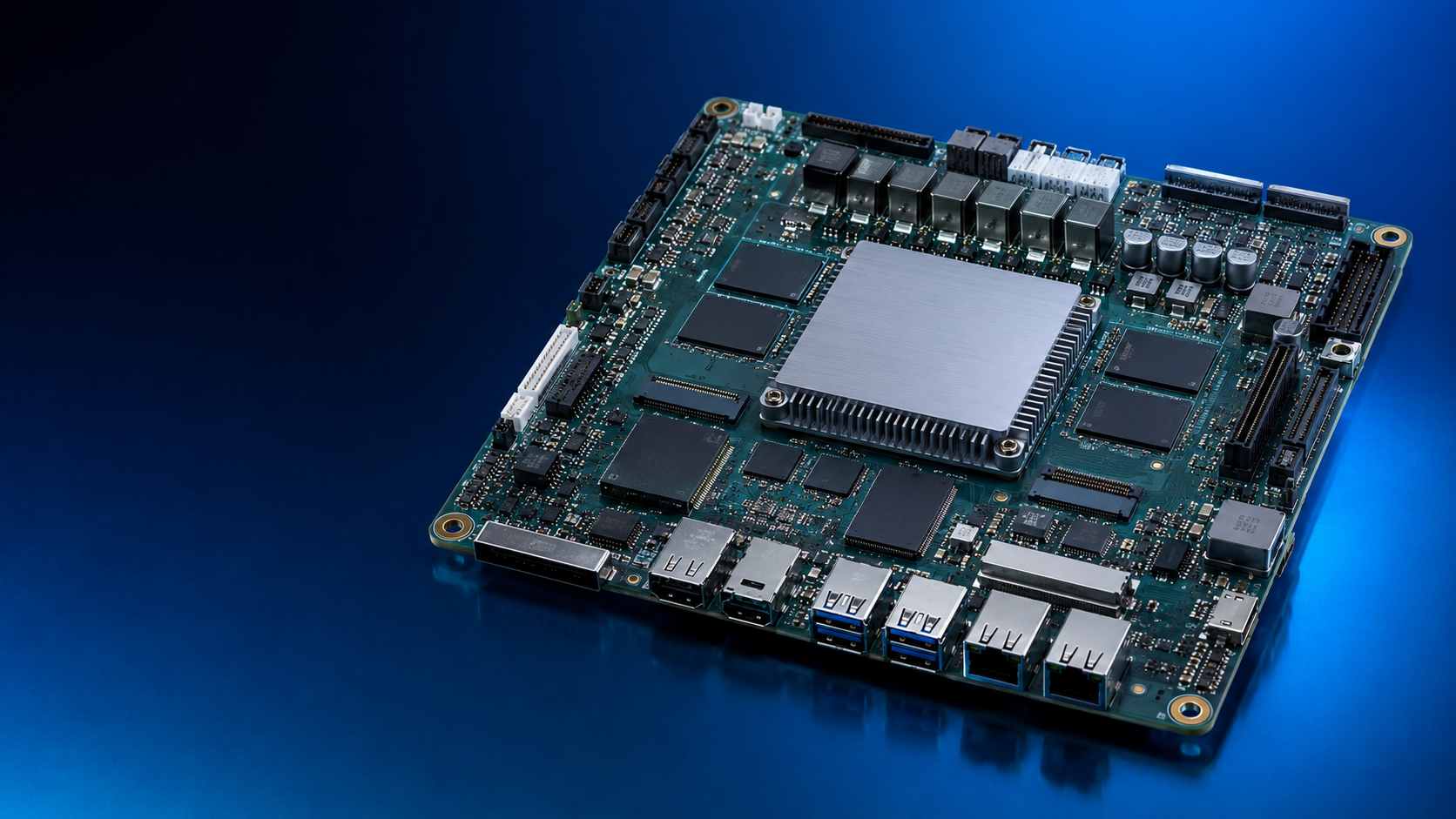
Key Features
GPU/NPU/AI-SoC acceleration
High-speed memory and storage
Multi-sensor and network connectivity
Advanced power sequencing and thermal management
Typical Electronic Components
AI SoC/GPU/NPU/FPGA; LPDDR/DDR; NVMe/eMMC; PCIe switch; Ethernet PHY; camera interfaces; multi-phase regulators; security IC.
Reference PCB and PCBA Parameters
Reference item | Typical guidance |
Typical layers | 10-20+ layers |
Material | High-Tg, low-loss material selected by speed |
Density | Advanced HDI, microvias and via-in-pad |
High-speed buses | DDR/LPDDR, PCIe, MIPI, USB and multi-gigabit |
Thermal | Heat sink, vapor chamber or chassis conduction as required |
Testing | Boot, memory, interfaces, AI workload and thermal stress |
Manufacturing and Engineering Priorities
Co-design stack-up, BGA escape, memory topology and power delivery.
Simulate or review signal integrity and power integrity for critical buses.
Sequence numerous low-voltage rails exactly to processor requirements.
Develop a thermal solution based on sustained workload, not processor TDP alone.
Design and Commercial Cautions
Computing performance depends on software, model, memory bandwidth, cooling and power limits.
Processor availability and lifecycle planning are major sourcing risks. Security, firmware access and customer intellectual property require controlled handling.
|
Applications
Autonomous AMRs, advanced inspection systems, robot dogs and humanoid robots.

